
渴望
Australia's defense‑funded report hypes risks to subsea cables to 'serve military goals'_我的网站

一 |
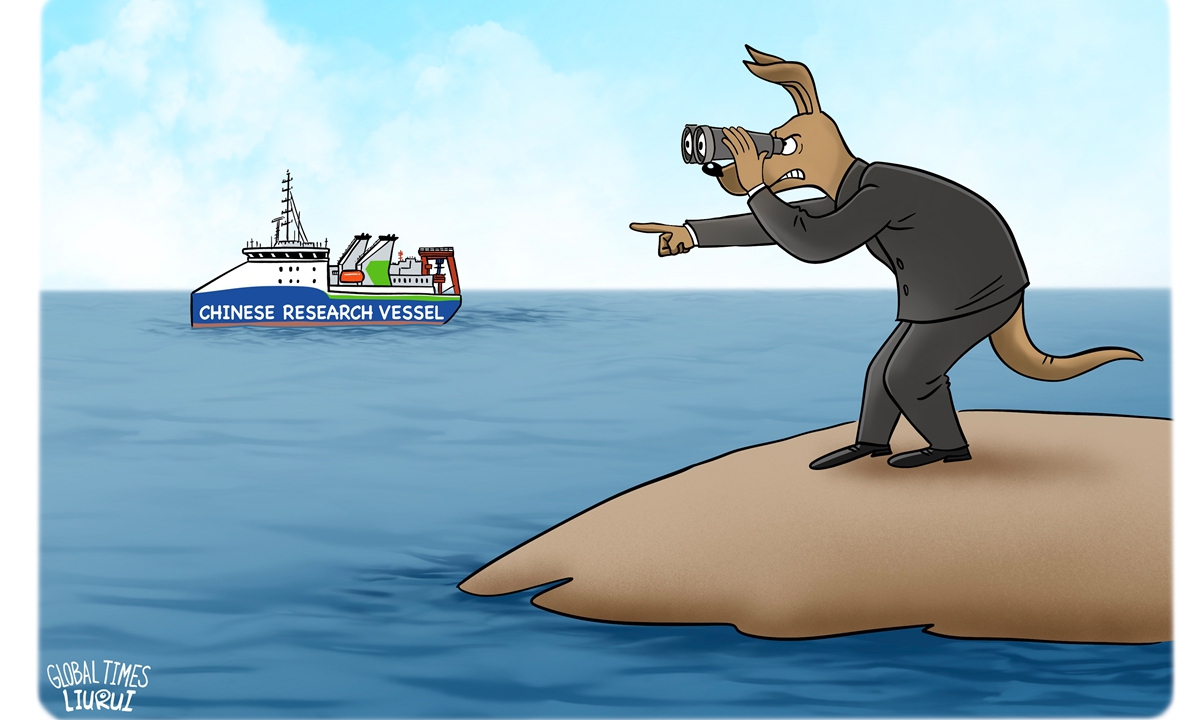
Published by the National Security College at the Australian National University (ANU), the paper claimed recent damage to cables in the Baltic Sea and around China's Taiwan region suggests "state actors are now actively probing and testing cable infrastructure in peacetime as part of broader hybrid warfare strategies" to rapidly degrade connectivity at the outset of a conflict, The Australian reported.
The paper claimed 16 privately owned subsea cables that carry 99 percent of Australia's internet traffic are a "high priority target" for Australia's adversaries that could be severed in a conflict, threatening the nation's economy and social fabric, according to The Australian.
The report singled out China and Russia for blame, saying that there have been multiple apparent attacks on submarine cables in recent years in European waters as well as near China's Taiwan region, suspected to be linked to Russia and China, the Straits Times reported.
However, the report cites a 2025 voyage by Chinese research vessel Tan Suo Yi Hao along Australia's western and southern coastlines as evidence to back its claim that "potential adversaries are actively gathering information about Australia's cable infrastructure."
This report, relying on the routine scientific operations of a Chinese research vessel in 2025 to level allegations of offensive actions against China, and employing ambiguous terminology such as "suspected" and "potential," demonstrates Australia's evidentiary leap, Chen Hong, director of the Australian Studies Center of East China Normal University, told the Global Times on Monday.
This erroneous claim was refuted by the Chinese Foreign Ministry at the time. Chinese Foreign Ministry spokesperson Guo Jiakun said on March 31, 2025 that China carries out normal activities at sea in accordance with international law, including UNCLOS.
"We hope Australia will have a right understanding of this and stop the groundless suspicion and speculations," Guo added.
This is not the first time certain Australian politicians has leveled baseless accusations of China intending to sabotage its undersea cables. Back in May, Defense Minister Richard Marles claimed during the Shangri-La Dialogue that China ought to boost transparency around its maritime operations. He also asserted that a surge in damage to subsea cables had transformed the seabed into a "battlefield," per The Australian.
Chen said Australian side's scaremongering is tied to its predictive threat‑perception framework forged in recent years. This framework designates China and other countries as strategic competitors in advance, subsequently forces routine scientific activities into a confrontational framework, Chen said.
Apart from unfounded allegations against China, the paper claims Australia's defense military "must incorporate the defense of submarine cable infrastructure into its operational planning," according to The Australian.
It added the government should also consider up¬grading an auxiliary ship operated by the navy, ADV Guidance, to enable it to repair damaged cables.
The vast majority of submarine cable damages are caused by accidental factors such as fishing operations and vessel anchoring, rather than deliberate sabotage. For suspected cases of intentional damage, independent technical investigation bodies should be established, and the principle of "investigate first, characterize later" should be strictly applied, so as to prevent ordinary maritime accidents from escalating into diplomatic conflicts, Chen said.
The core problem of Australian side's submarine cable security lies entirely with itself. Instead of addressing its own infrastructure shortcomings and improving its domestic protection and maintenance systems, the Australian side has chosen to continually exaggerate external threats and stoke bloc confrontation, the expert added.
Chen said that by fabricating alleged Chinese threats, Australian side seeks to "rationalize" its military spending increases and underwater force expansion. The submarine digital infrastructure originally meant to serve global development has been labeled along us versus them lines, and this constitutes the biggest hidden danger, he added.
。 (ECNS) -- An "Ice Silk Road" is emerging in the Arctic, offering China and Europe a shorter maritime link and, more importantly, a new option for navigating an increasingly uncertain global trading environment. Chinese container shipping company Sea Legend Line has announced plans to launch the first regular container service across the Arctic. The route is set to begin its maiden voyage on Saturday and will operate weekly, with eight voyages scheduled. The route underwent a trial voyage last autumn. In September 2025, the container ship "Istanbul Bridge" departed from Ningbo-Zhoushan Port and arrived at the Port of Felixstowe in the United Kingdom 20 days later. The new China-Europe Arctic Express will pass through the Bering Strait and sail westward along the Northeast Passage, reaching Felixstowe in the United Kingdom in just 18 to 20 days before connecting with ports in Germany, the Netherlands and Poland. By comparison, shipments from China's Ningbo-Zhoushan Port to Europe via the Suez Canal typically take at least 40 days. Rerouting around the Cape of Good Hope due to congestion or geopolitical disruptions can extend transit times to more than 50 days. The Arctic route could offer significant advantages in both speed and cost. Faster deliveries would allow Chinese manufacturers to reduce inventory levels and accelerate cash flow. Reports suggest that companies using the route could cut inventories by as much as 40%. The naturally low temperatures along the route could also make it suitable for transporting high-value, temperature-sensitive cargo, including precision instruments and new-energy batteries. Carbon emissions are expected to be nearly half those of traditional routes, according to reports. The route also bypasses major maritime chokepoints and areas affected by geopolitical tensions, including the Strait of Malacca, the Red Sea and the Gulf of Aden. This could provide companies with an additional option for improving the stability and resilience of their supply chains. However, the route also faces significant challenges. Sea ice limits the navigable season to roughly late July through October, while port services, supplies and emergency-response infrastructure along the route remain limited. It therefore cannot yet operate year-round and is unlikely to replace the Suez Canal route in the short term. Nevertheless, the Arctic route could strengthen the resilience and diversification of China-Europe trade. Together with land-based routes such as the China-Europe Railway Express, it could give China more options for transporting goods to European markets and reduce reliance on traditional southern maritime routes. Italian financial newspaper Il Sole 24 Ore described the route, dubbed the "Ice Silk Road," as a symbolic revival of the ancient trade links between East and West. As new shipping routes emerge across the Arctic, the geography of global trade may gradually be reshaped, giving international supply chains more options in an increasingly uncertain geopolitical environment. (By Gong Weiwei)

 。
。Current article:http://eko.longdachemakuanshan.pics/tiplo95/96jl.html
Published on:11:06:31
相关新闻
- 救援队志愿者造谣“宁夏3点有大地震”,公安介入,律师:若造成严重后果可判三年以上
- 传统文化赋能新业态 七夕消费添“热度”
- 零跑汽车确认布局机器人业务,称将很快发布正式公告
- 6.3 magnitude earthquake hits Afghanistan days after devastating weekend quakes
- जर्जर घोषित भवन में चल रहा रेवाड़ी बस स्टैंड, भरभराकर गिर रहा प्लास्टर, खतरे के साये में रोडवेज कर्मी
- 橋下徹氏 “竹島の日”閣僚派遣なしに「やるやる詐欺をする高市さんはダメ。高市大応援団もダンマリ」
- 上海黄浦:到2030年,预计累计新增高能级首店100家左右
- 覆盖超八成国土面积,国家水网长什么样?
- 新加坡花旗银行CitiBank远程开户指南
- 特朗普暗示:可出动美军干预债市
最后更新
- 前上海海港主帅是如何借铁腕手段与过人智慧,帮助狼队保级的?
- 贵阳:多举措确保物流保民生_配送_社区
- “王老吉”商标战火再起,给出海企业提了个醒
- 开展夜查专项行动 维护道路交通安全
- 卓创资讯:钢材负反馈交易近尾声8月份建筑钢材脱离底部
- 【哈幼·后勤保健】合肥市哈尔滨路幼儿园: 科学测体能 运动促成长——幼儿体能测试
- 兵车辚辚向战行,陆军某合成旅跨昼夜机动演练掠影
- Dhurandhar Box Office Day 3: Ranveer Singh's Film Crossed Rs 100 Crore Mark
- 雷军手持神秘新机,这是小米阔折叠手机?
- 长城汽车 2026 年上半年归母净利润 24.65 亿元,同比下降 61.11%
热门新闻
- Israel reaches historic agreement with Lebanon
- gaems已经推出了一个游戏机的手提箱,主机不再担心丢失粉末。
- Dehradun News: खेल महाकुंभ में सीएम, सांसद व विधायक के नाम पर होंगी ट्रॉफी, विजेताओं को मिलेगा ये इनाम
- 【仓单】8月26日郑商所玻璃期货仓单较上一日下降11张
- 国家邮政局:中秋假期全国共揽投快递包裹超17亿件_疫情_防控
- 再添穿黄“新动脉” 济南跨黄通道布局进一步完善
- 中国人民银行拟细化有关规定督促支付机构合规展业
- 国际足联主席召开危机会议
- 脑机接口再迎政策催化 逾30家上市公司抢先布局
- 三大台风将如何影响我国